

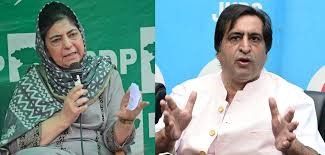
In a controversial move, Mehbooba Mufti, the chief of the Peoples’ Democratic Party, and Sajjad Lone, the leader of the Peoples’ Conference, have claimed they were placed under house arrest to thwart their plans to visit Sopore, Kashmir. This incident occurred on Thursday, following the death of former Hurriyat Conference chairman Abdul Gani Bhat.
Mufti stated, “The decision to place the political leadership under house arrest today, simply to stop us from visiting Sopore to offer condolences on the demise of Professor Abdul Gani Bhat, lays bare the harsh and undemocratic reality in Jammu and Kashmir,” via a post on X.
Abdul Gani Bhat passed away in Sopore on Wednesday evening due to a prolonged illness. His demise has rekindled tensions in the area with political leaders feeling increasingly constrained.
Public Sentiment and Political Turmoil
Amid the political unrest, Mufti referred to a recent incident at the Hazratbal Shrine, emphasizing that it reflects public discontent. She commented, “What unfolded at Hazratbal Dargah was a loud, unmistakable message from a people pushed to the edge.” This incident occurred after a plaque featuring the Ashoka emblem was vandalized on September 5, igniting a firestorm of controversy among the diverse political parties in Kashmir.
Responses to Political Repression
Mufti, highlighting the urgency of the situation, pointed out, “The BJP remains willfully blind to this truth, refusing to learn from the deep anguish and suppressed emotions that have been building for years now.” Her statement underscores the intense divide between the government and the residents of Jammu and Kashmir.
Additionally, there is growing concern over the BJP’s approach, with Mufti arguing that it reflects an absence of genuine interest in pursuing peace and resolution in Kashmir. She emphasized that the current political climate is indicative of a trend where discomfort and unrest are utilized for political gains.
Sajjad Lone’s Perspective
Sajjad Lone also voiced his grievances regarding his house arrest, stating, “I have been put under house arrest in order to prevent me from visiting Botingoo, the ancestral village of Professor Ghani sahib.” This, he argues, raises questions about the necessity and implications of such actions by the authorities.
Lone’s criticism extends toward the government’s treatment of political figures, particularly regarding their freedoms and rights. He noted, “Professor sahib was a pacifist and long retired. A final goodbye is something we all deserve.” His words resonate with many in the region who feel similarly disenfranchised.
The Bigger Picture: Ongoing Political Struggles
The house arrests of both Mufti and Lone highlight the deteriorating political situation in Jammu and Kashmir. Public outcry and political dissent seem to be increasingly met with heavy-handed tactics from authorities.
Moreover, as tensions arise, it remains critical to question how these actions affect the overall peace and stability of the region. Many believe that ignoring the voices of local leaders can escalate unrest rather than quell it.
In light of these events, observers suggest that the situation warrants more attention from national entities to ensure that political dialogue is not stifled. Empowering voices like those of Mufti and Lone could be a step forward in addressing long-standing issues in Kashmir.
The unfolding saga serves as a reminder of the delicate nature of politics in the region and the ongoing struggle for political freedoms. As these leaders remain under house arrest, many are left pondering the implications for future dialogues and peace in Jammu and Kashmir.