

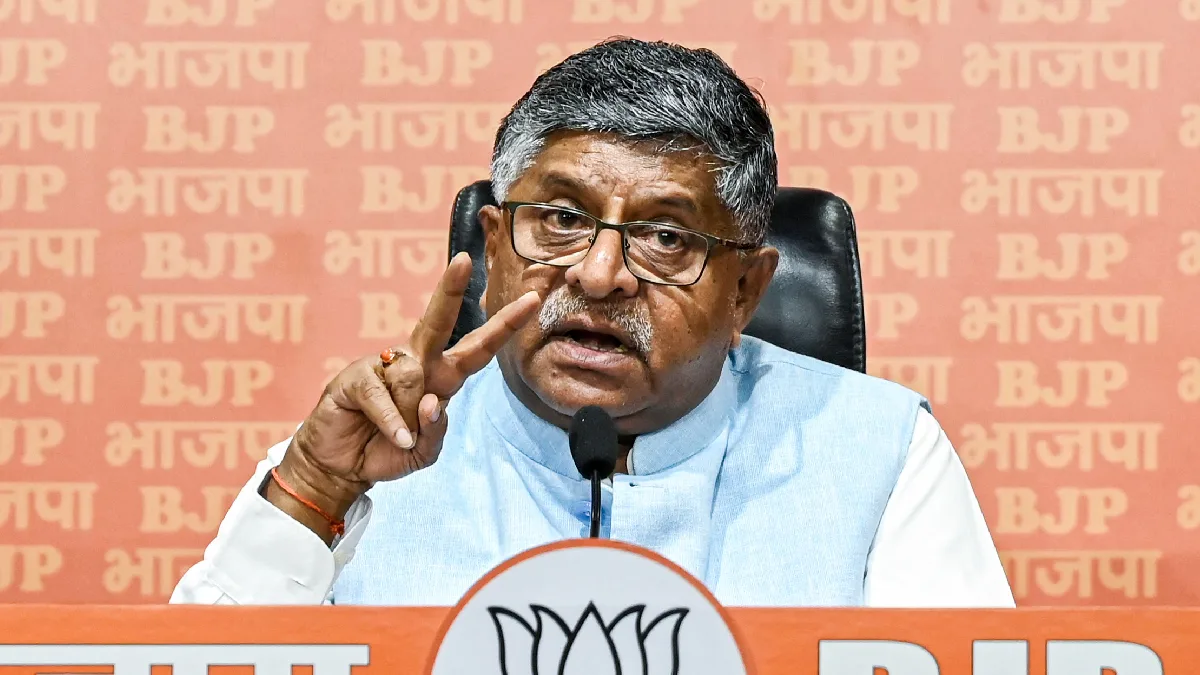
On Friday, the Bharatiya Janata Party (BJP) struck back at Congress leader Rahul Gandhi after he accused officials of deleting 6,000 voters’ names in Karnataka’s Aland Assembly constituency. This controversy began when Gandhi claimed that Chief Election Commissioner Gyanesh Kumar was protecting the individuals responsible for this alleged action.
Who Accused Whom? BJP leaders, including former Union minister Ravi Shankar Prasad, emphasized that these accusations from Gandhi are a desperate attempt fueled by his party’s declining popularity. Prasad stated, “Rahul Gandhi is systematically trying to weaken India’s democracy because the public doesn’t vote for him.” This comment highlighted their stance that Gandhi’s allegations are unfounded.
What Is the Allegation? Gandhi’s claims stem from irregularities he perceived during the Karnataka elections in 2023, despite Congress winning that election. Specifically, he alleges that voter suppression tactics were at play, raising questions about the integrity of elections in the region.
When Did This Happen? This exchange of accusations intensified just after Gandhi’s press conference, where he reiterated his concerns about electoral fairness. Prasad’s responses came swiftly, showcasing the ongoing political tension as the country heads toward the 2024 elections.
Where Do These Events Occur? This clash of claims is unfolding in Karnataka, a key battleground with significant political weight. The BJP, which has been dominant in Indian politics, aims to maintain its influence by asserting the validity of its electoral victories and the motives behind Gandhi’s accusations.
Why Is This Significant? The allegations are significant not only for their immediate impact but also for the upcoming elections. Prasad pointed out the irony of Gandhi blaming the current administration for potential vote manipulation while his party is in power in Karnataka.
Prasad continued, “Rahul Gandhi, please stop abusing the democratic choice of the voters of India.” He accused Gandhi of propagating false narratives about the 2014 and 2019 elections, asserting that Gandhi’s statements lack credible evidence and are simply an attempt to slander the ruling party. This approach reflects a broader concern within political circles regarding the health of democracy in India.
As political analysts observe these exchanges, some argue that Gandhi’s struggle may reflect a larger trend of politicians challenging electoral processes when losing credibility with voters. “It’s not just politics; it’s about maintaining the respectability of political institutions,” stated electoral expert Dr. Anjali Desai in an interview.
Moreover, Prasad reaffirmed that the Chief Election Commissioner, Gyanesh Kumar, was not in office during the previous state election, making Gandhi’s accusations difficult to justify. “Making accusations without evidence and presenting a wrong picture before the country has become Rahul Gandhi’s habit,” he added
BJP representatives steadfastly defend their electoral integrity, reiterating that the Congress party’s accusations stem from frustration rather than reality. The political theater plays on as both parties prepare for an increased campaign presence leading to the 2024 elections. “What’s wrong with Rahul Gandhi? How many lies will he tell? How much will he distort facts?” Prasad questioned, illustrating the skepticism towards the Congress party’s claims and strategies.
In conclusion, the situation in Karnataka serves as a microcosm of the larger political atmosphere in India, where allegations of electoral malpractice become an integral part of political dialogue. As the political landscape evolves, both the BJP and Congress face the challenge of addressing voter concerns while maintaining their narratives.