

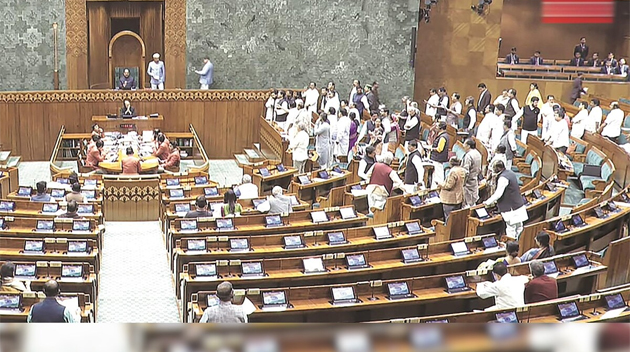
The Congress party is likely to stay away from the joint parliamentary committee (JPC) formed to scrutinize three controversial Bills aimed at removing top government officials detained for serious allegations. The decision may be officially communicated to Lok Sabha Speaker Om Birla shortly, party insiders revealed on Monday.
Besides Congress, at least three other opposition parties—the Trinamool Congress, Shiv Sena (UBT), and Aam Aadmi Party—have declared their intention to boycott the JPC. The Samajwadi Party has expressed its support for a united opposition stand against participation in the committee. While some smaller parties have yet to announce their decision, none have indicated willingness to participate.
Earlier, Om Birla remarked that no political party has officially communicated with him regarding a boycott of the JPC. He stated,
“On the issue of JPC, no political party has communicated to me in writing on this subject,”
adding clarification on the parliamentary process.
The controversy centers around three Bills introduced by Home Minister Amit Shah during the concluding day of the Monsoon Session:
- The Government of Union Territories (Amendment) Bill
- The Constitution (One Hundred and Thirtieth Amendment) Bill
- The Jammu and Kashmir Reorganisation (Amendment) Bill
These proposals permit the removal of the Prime Minister, Chief Ministers, and other ministers if they face serious charges and are arrested for 30 consecutive days. The introduction of these Bills ignited significant protests among opposition parties who labeled them unconstitutional and politically charged, aimed at undermining political rivals.
As of now, the committee designed to review these Bills has yet to be established. The House referred the legislation to a joint committee consisting of 21 members from the Lok Sabha and 10 from the Rajya Sabha, but the constitution of this committee remains pending amid the boycott threat.
The ongoing tensions surrounding these Bills underscore the polarizing nature of contemporary Indian politics, where legislative disputes often lead to heightened confrontation between ruling and opposition parties. The Congress, alongside its coalition partners, views their upcoming boycott as a strategic maneuver to amplify the demand for accountability and resist what they consider authoritarian moves by the current government.