

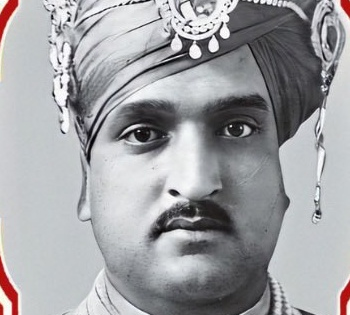
Jammu and Kashmir’s Lieutenant Governor Manoj Sinha recently commemorated the 130th birth anniversary of Maharaja Hari Singh, the last Dogra ruler, during a solemn tribute. Sinha emphasized that Hari Singh was not just a monarch but a statesman of excellence who laid the groundwork for progressive governance in the region.
Using his official X account, Sinha expressed, “Tributes to Maharaja Hari Singh Ji on his Janm-Jayanti. A statesman of excellence & harbinger of change, he introduced landmark reforms to ensure welfare of common man. His legacy of inclusive governance, progressive vision & contributions to motherland continues to inspire us.” This statement highlights the enduring significance of Maharaja Hari Singh’s reforms in Jammu and Kashmir.
Maharaja Hari Singh ascended to the throne in 1925 and ruled until 1947, a time when he introduced numerous social and political reforms aimed at modernizing the princely state and enhancing the welfare of its residents. His progressive polices emphasized education and infrastructure, and he took steps to improve the conditions of life for common people.
Under his rule, Jammu and Kashmir witnessed remarkable changes. He was instrumental in establishing educational institutions, health services, and infrastructure development, which have left a lasting impact on the region. His emphasis on inclusive governance has become a benchmark for leaders in the state.
The tributes came at a time when the region is experiencing significant political and societal changes. Maharaja Hari Singh’s legacy serves as an inspiration for many, reminding the current generation of the importance of governance that prioritizes the well-being of all citizens.
In the present day, pundits and citizens alike often reflect on how the Maharaja’s vision for a more inclusive society can still resonate with contemporary governance challenges. Experts believe that focusing on the principles upheld by Hari Singh could guide current leaders toward more effective policies that address the needs of every citizen.
Sinha’s remarks reflect a broader recognition of historical figures whose contributions to society continue to hold relevance. The celebration of such anniversaries reinstates important discussions around historical governance, social equity, and the critical aspects of leadership.
As Jammu and Kashmir moves forward, the essence of Maharaja Hari Singh’s reign reminds the populace of its rich heritage while inspiring a governance model that aspires for inclusivity and progress. By honoring such figures, leaders encourage future generations to embrace values of service and commitment to public welfare.