

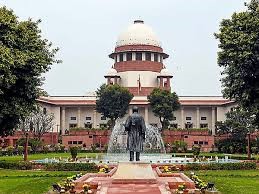
The Supreme Court granted the Central Bureau of Investigation (CBI) permission on Tuesday to register six additional cases concerning the ongoing fraud against homebuyers in the National Capital Region (NCR). This decision follows allegations of collusion between banks and real estate developers to defraud individuals investing in housing projects.
Justices Surya Kant, Ujjal Bhuyan, and N Kotiswar Singh permitted the CBI to initiate investigations for projects that span major cities including Mumbai, Bengaluru, Kolkata, Mohali, and Prayagraj. This order comes after Additional Solicitor General Aishwarya Bhati confirmed that the CBI’s preliminary inquiries are complete for the majority of the builders involved, excluding Supertech Ltd.
Bhati reported that these investigations identified potential cognizable offenses, thereby justifying the need for the registration of regular cases. The agency expressed readiness to expedite the process through immediate registration and search operations.
The top court previously allowed the CBI to investigate 22 cases related to the alleged fraud against homebuyers in the NCR. These cases involve developers operating within Uttar Pradesh and Haryana. Under existing subvention schemes, banks directly disburse funds to builders while homebuyers bear the responsibility for paying EMIs until the possession of flats is granted.
SHO’s failure to disclose, which has been a significant concern, led to homebuyers being pressured to continue EMI payments even as builders defaulted on their own commitments to the banks under the tripartite agreements.
On July 22, the court directed the CBI to complete preliminary inquiries regarding projects outside the NCR within six weeks. As the investigation unfolds, the CBI regards it as crucial to ensure that justice prevails for the homebuyers affected by this widespread scam.
More than 1,200 homebuyers have approached the Supreme Court, arguing that banks are enforcing EMI payments despite the lack of apartment possession. This case highlights a worrying trend among numerous builders across prominent housing projects in areas like Noida, Greater Noida, and Gurugram.
The Supreme Court has initiated intense scrutiny towards the activities of several renowned financial institutions, identifying a probable link between them and builders, particularly Supertech Ltd. The court has observed that the collusion of financial institutions and developers could potentially lead to substantial financial losses for individuals seeking permanent housing solutions.
The amicus curiae, tasked with assisting the court, recently labeled Supertech Ltd as the “main culprit” in defrauding homebuyers. Reports indicate that Corporation Bank alone disbursed over Rs 2,700 crore to multiple builders under these subvention schemes.
Additionally, reports from the amicus curiae pointed out that Supertech Ltd has been linked to securing an astounding Rs 5,157.86 crore in loans since its inception in 1998. These revelations raise critical questions about the regulatory oversight on lending practices and transparency in housing projects.
This ruling follows earlier directives issued by the Supreme Court throughout 2023 that led to the registration of preliminary inquiries into the affairs of various builders in the National Capital Region. These actions reflect the court’s commitment to addressing systemic inefficiencies and fraudulent phenomena within the housing sector.
As this investigation evolves, the implications for homebuyers and the construction industry will become evident. Legal experts anticipate that this case could set a precedent for accountability among builders and banks in India, aiming to restore integrity in a sector marred by malpractice.