

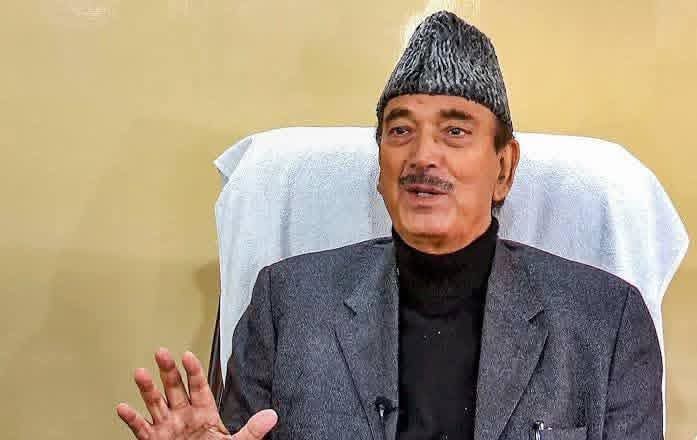
In a significant development on September 17, 2023, Ghulam Nabi Azad, the Chairman of the Democratic Progressive Azad Party (DPAP), firmly disowned misleading statements circulated in the party’s name. Azad clarified that the party currently has no spokesperson or representative authorized to speak on its behalf, emphasizing the importance of clear communication within the political landscape.
DPAP’s Official Stance on Statements
Azad made these remarks during an address to Local News Agency KNS, where he outlined the current status of party communications. “We have already dissolved all committees, even Spokespersons,” he stated, indicating a significant shift in the party’s internal structure. Azad highlighted that any individual making claims on behalf of DPAP should not be attributed to the organization.
The Need for Clear Representation
The DPAP chairman stressed the necessity for clear representation within the party. “If any person issues a statement claiming to represent DPAP, it should not be attributed to the organization. The party will not take responsibility for such remarks,” he noted. This statement comes as a response to recent unauthorized declarations circulating in the media, which Azad described as misleading and unreflective of the party’s official stand.
Importance of Authoritative Voices
According to Azad, until new office bearers are formally appointed, no one has the authority to issue political or organizational statements in the name of the party. This emphasizes the need for accountability and a unified voice in times of political discourse. He reiterated that party leaders could comment on general public issues, but only after consulting him personally.
Public Reaction and Media Coverage
The media has taken note of Azad’s strong clarification amid a backdrop of rampant misinformation. On social media platforms and news outlets, numerous discussions have emerged, questioning the authenticity of statements made in DPAP’s name. Statistics show that misleading political statements can significantly influence public opinion, making it crucial for parties to maintain clarity in their communications.
In light of these events, Azad’s request for truthful and responsible commentary reflects a broader trend in political communication today. As misinformation can create confusion among the public, effective communication strategies are more important than ever for political entities.
In conclusion, Ghulam Nabi Azad’s recent clarification serves as a reminder for political parties to manage their communications effectively. As the DPAP navigates these turbulent waters, the importance of having an authorized voice remains paramount.